

Jan 13, 2026
Last Modified: Jan 22, 2026

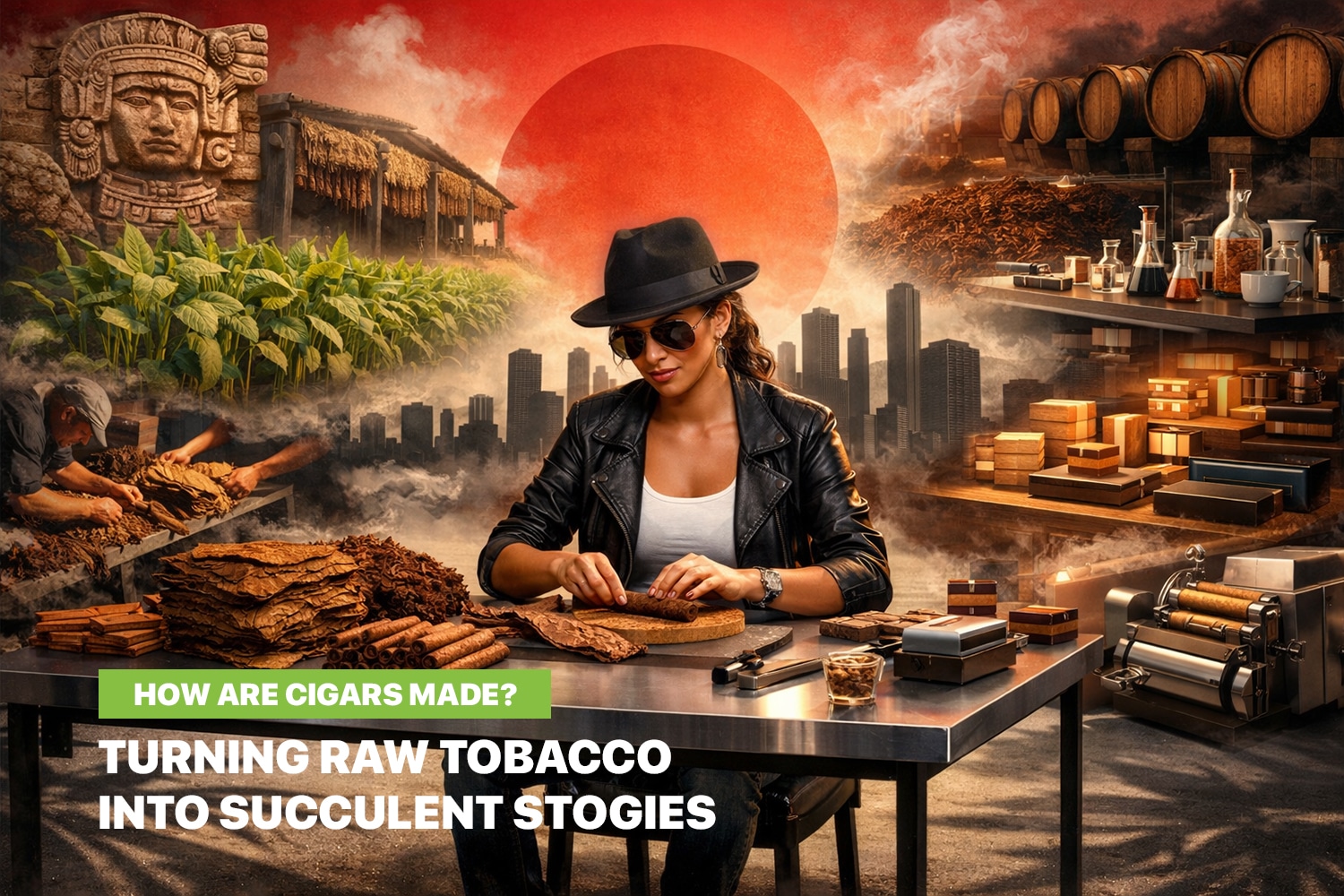
The history of cigars goes back millennia. But how are cigars made?
As more regions around the world have started growing tobacco, competition has intensified. So, brands have naturally been seeking ways to create enticing new flavors.
These days, there’s a lot more to cigar making than simply rolling up tobacco leaves. Here’s a look at the true craftsmanship involved, from preparing the tobacco to aging the stogie.
History of Cigar Making
It’s thought that cigars were invented more than 3,000 years ago by the Maya civilization. Cigar smoking soon caught on among other indigenous tribes in the Americas.
After Christopher Columbus landed in Cuba, he observed how the natives made cigars. This involved rolling up dried tobacco leaves before lighting them.
By the 19th century, Cuban tobacco was widely regarded as the world’s best. Nonetheless, other regions (including Nicaragua and Honduras) also started harvesting their own tobaccos.
The taste and aroma of tobacco strongly depend on where the plant itself is grown. The modern cigar making process often entails blending tobaccos from various territories. This experimental approach results in unique flavor profiles.The taste and aroma of tobacco strongly depend on where the plant itself is grown. The modern cigar making process often entails blending tobaccos from various territories. This experimental approach results in unique flavor profiles.
The Raw Materials
Unlike cigarettes, cigars tend to be made entirely of tobacco leaves. These comprise the three major parts of a cigar, the filler, binder, and wrapper. Here’s how they differ:
- Filler: The ‘guts’ of the cigar. The filler leaves are concealed deep within the cigar. As such, they are mainly chosen for their flavor and strength. They don’t need to be visually appealing.
- Binder: This middle layer is so-called as it ‘binds’ the filler leaves together. Compressing them helps the cigar to preserve its distinct shape.
- Wrapper: This is the outermost covering. That’s why the most aesthetically pleasing leaves are often saved for the wrapper. It can also be responsible for most of the stogie’s flavor.
The combination of tobaccos in a cigar largely defines its flavor profile. However, extra flavoring ingredients can also be added during the cigar making process.
Growing and Harvesting Tobacco
Where tobacco is grown has implications for its quality and flavor. For example, the volcanic soil of Nicaragua gives its tobacco a spicy kick. Meanwhile, tobacco from the Dominican Republic tastes subtly sweet. If you’ve ever wondered “How are cigars made”, it all starts with:
- Planting: Once the tobacco has been germinated, it is transferred to the field. The choice of field is crucial. The tobacco plant thrives in well-drained soil and direct sunlight.
- Curing: After being harvested, the tobacco leaves are left to dry in a curing barn for several weeks. This process brings natural sugars to the fore, enhancing the leaf’s flavor.
- Fermentation: The leaves are stacked in piles. In turn, these are subjected to carefully controlled levels of humidity and temperature. This is a surefire way to rid the tobacco of lingering bitterness as well as enhance the overall aroma.
Sorting and Preparing the Tobacco
Different parts of the tobacco plant provide different types of leaves. Ligero leaves come from the top, seco leaves from the middle, and volado leaves from the lowest part. Here’s what cigar makers initially do with the tobacco after it is harvested:
- Leaf Selection: It’s important to choose the right leaves for each part of the cigar. As ligero leaves get the most sun exposure, they are especially flavourful. This makes them ideal for the filler. Volado leaves are best used as the binder, as this is intended to help the cigar burn evenly.
- Aging: How are cigars made to a premium standard? One crucial step in the process is aging. This is where the cigar is stored at optimal temperature and humidity, for months or even years. The flavor will mellow as a result.
Rolling the Cigar
In the modern era, machines enable cigars to be speedily mass-produced at large scale. For centuries, though, cigars were rolled by hand. Many premium cigars still are. Here’s how humans compare to machines when it comes to rolling cigars:
- Hand Rolling: Human rollers spend years honing their skills. And it shows. They can be especially thoughtful with how they combine different types of tobacco. This gives the cigars sophisticated flavor while ensuring a smooth, even burn.
- Machine Rolling: Cigars made in automated fashion are much cheaper than hand-rolled alternatives. You also don’t need to cut the cigar before smoking it. However, they are less complex in taste and come with a tighter draw.
Aging the Cigar
Yes, the cigars go through another round of aging. However, the purpose is slightly different this time. The stogies are all transferred to the same storage room. This is otherwise known as the ‘marriage room’, for a very good reason…
The idea is that the cigars will ‘inter-marry’ by absorbing each other’s oils and aromas. This will leave all the stogies similar in both taste and scent. These cigars can subsequently all be advertised as the same product.
The customer needs to know what they’re getting, so this is another step that cigar brands take to ensure that. This stage of the cigar making process can last anywhere from a few weeks to a year.
Can You Age a Cigar Yourself?
Once you’ve got hold of a cigar, you can age it even more to further enhance the flavor. However, it’s crucial that you educate yourself on which cigars get better with age. Not all sticks fit into this category.
Those that do include full-bodied Cohiba and Montecristo cigars. At the same time, aging a cigar effectively takes a lot of patience and the right form of storage. That’s why it pays for you to know the best cigar humidors on the market.
How are Cigars Made? With Class!
Throughout its history, the cigar has been smoked by the rich and famous. It’s even been used for medicinal purposes. To really understand the benefits of cigars, though, you need to know how they are made.
So, how are cigars made? Basically, with a lot of dexterity and skill. Machine-made cigars are a thing, especially for the budget-conscious. However, handmade stogies more than warrant their ‘premium’ tag.
It’s up to you which type of cigar you go with. If you do fancy lighting up, we offer a broad selection of quality stogies. It’s easy to order them online for worldwide delivery, too. You can drop the Swiss Cuban Cigars team a line by emailing [email protected].