

Sep 27, 2024
Last Modified: Aug 11, 2026

Setting up a humidor is essential if you want to preserve the quality and freshness of your cigars. Even the highest-end humidor won’t do its job or work the way it should if it’s not properly seasoned and maintained.
Without the right setup, cigars can dry out, lose their flavor, or even become moldy. In this step-by-step guide, we’ll walk you through everything you need to know to prepare your humidor. This includes seasoning it correctly and monitoring humidity levels. This ensures your cigars stay in perfect smoking condition
What You Need to Set Up a Humidor
Before you begin setting up your humidor, it’s important to gather the right tools and supplies. Each item is crucial in setting up a humidor. They will help create and maintain the ideal environment for your cigars. Here's what you'll need:
- The Humidor (New or Unused): This is the storage box. It's designed to maintain consistent humidity. This manages the temperature of your cigars.
- Humidification Device: This regulates moisture inside the humidor. Options include humidification gel, silica beads, Boveda packs, or electronic humidifiers. This depends on the size and style of your humidor.
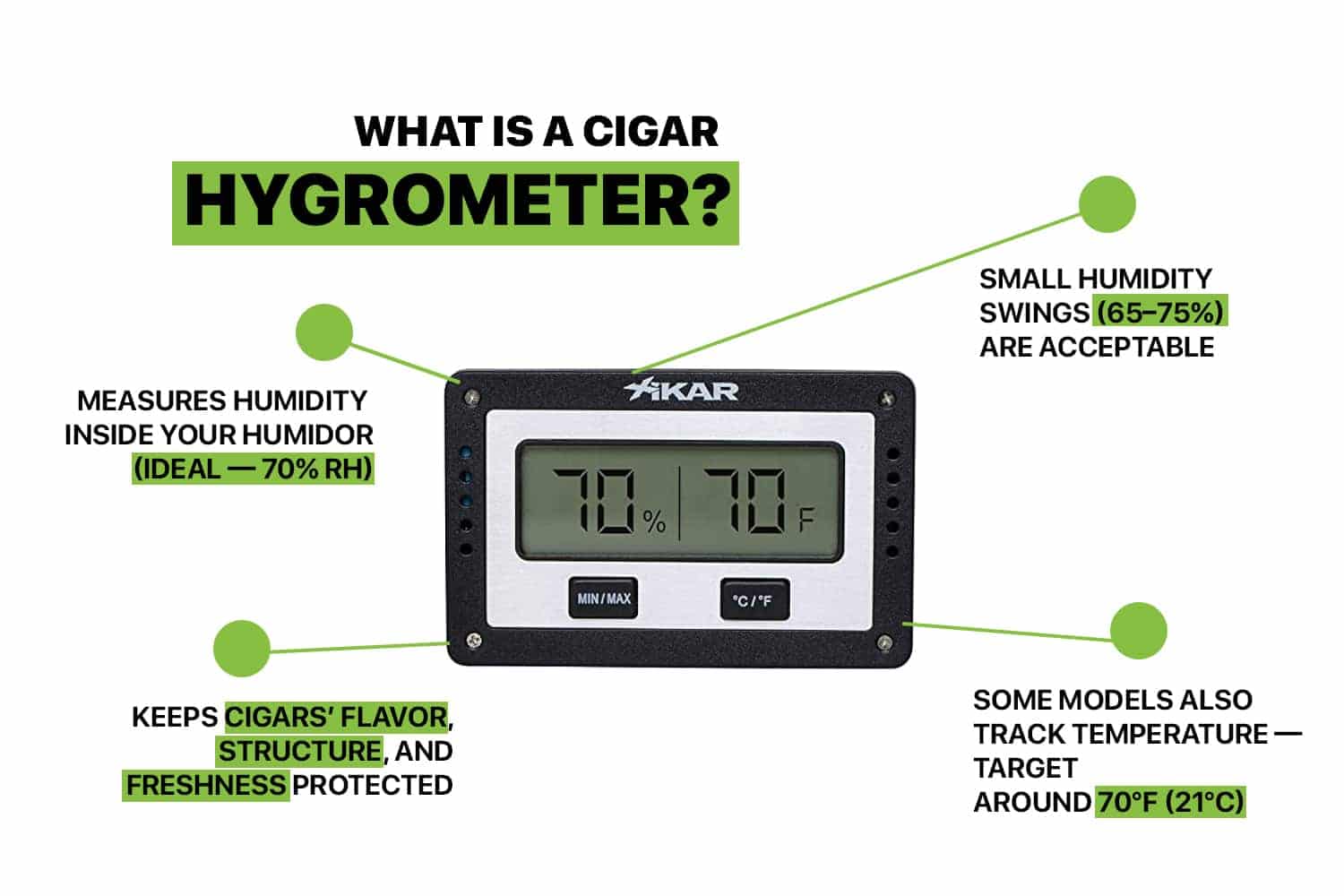
- Hygrometer (Digital or Analog): Used to monitor humidity levels inside the humidor. A digital hygrometer is generally more accurate than analog.
- Distilled Water or Propylene Glycol: Used to charge your humidification device. Distilled water avoids mineral buildup. Propylene glycol helps stabilize humidity over time.
- Seasoning Kit: These kits simplify the initial seasoning process. They provide pre-measured humidity packets designed for new humidors.
- Calibration Kit: Used to verify and adjust the accuracy of your hygrometer. This ensures you get reliable readings.
- A Clean Towel or Dish Rag: You’ll need this to wipe down the interior surfaces during seasoning. This removes dust, debris, and any residues. It helps ensure the humidor’s cedar lining is clean. This makes it ready to absorb moisture evenly.
Step-by-Step Guide to Set Up Your Humidor
Below is the full process, in the order you should actually do it. Each step sets up the next, so it's worth following them in sequence rather than jumping ahead. We cover everything from calibrating the hygrometer to loading your first cigars and holding a steady humidity levels.
Step 1: Calibrate Your Hygrometer
Before you trust a single reading, make sure your hygrometer is accurate. A gauge that's off by even five points will have you chasing the wrong humidity for the life of the humidor, so this comes first.
The reliable way to check it is the salt test. Put a teaspoon of table salt in a bottle cap, add a few drops of water to make a damp paste (not a puddle), and place the cap and the hygrometer together inside a sealed clear plastic bag or airtight container. Leave it undisturbed for about six hours. A correctly calibrated hygrometer will read 75% in that environment. If yours reads higher or lower, note the difference. Digital models usually have a calibration button to reset them to 75%. Analog models have a small screw on the back you turn until the needle sits at 75%. Always check the device's instructions before recalibrating.
Get this right once, and every reading afterward means something.
Step 2: Wipe Down the Interior
With a clean, lightly damp cloth, wipe the inside surfaces of the humidor to clear out any cedar dust or debris left from manufacturing. Use distilled water on the cloth, never tap water, and never soak the wood. You're wiping, not washing. This clears the surface so the cedar lining absorbs moisture evenly during seasoning.
Let the interior air-dry for a few minutes before moving on.
Step 3: Season the Humidor
Seasoning is the step most new owners skip, and skipping it is the fastest way to dry out your first cigars. A new humidor's cedar lining is bone-dry from the factory. Put cigars straight in and the thirsty wood pulls moisture out of them instead of holding a stable environment. Seasoning brings the cedar up to the right moisture level first.
There are two reliable ways to do it.
- The Boveda method (easiest): Place a humidor seasoning pack (an 84% pack is made for this) inside the closed humidor and leave it for about 14 days. The pack releases moisture into the cedar at a controlled rate, and there's nothing to monitor. This is the lowest-risk option for a first-timer.
- The sponge method (faster): Fully saturate a clean sponge with distilled water, wring out the drips, and set it on a dish or a plastic bag inside the humidor so it isn't touching the wood directly. Close the lid. Check daily, re-wetting the sponge as needed, until the humidity climbs and holds. This is quicker but needs watching, since a dripping sponge or direct contact with the wood can warp the lining.
Whichever you choose, be patient. Depending on the humidor's size and material, seasoning can take anywhere from a few days to two weeks. Rushing it is the single most common setup mistake.
Step 4: Charge and Place Your Humidification Device
Once the cedar is seasoned, set up the device that will hold humidity steady from here on. Remove the seasoning sponge or pack first.
Fill your humidifier with distilled water. For foam or sponge humidifiers, saturate the material fully, then drain off any excess so it isn't dripping. For gel, bead, and electronic humidifiers, add distilled water without overfilling.
Use only distilled water. It minimizes mineral deposits and limits mold and bacteria buildup. If you want tighter control, you can charge the device with a 50/50 solution, which is distilled water mixed with propylene glycol. It helps hold humidity steady and adds further protection against mold.
Mount the device where it won't touch your cigars or block the lid from sealing. If you're using magnets or Velcro, fix them now, and mount the hygrometer at the same time so the two aren't interfering with each other.
Step 5: Stabilize and Verify
Close the humidor and let it settle to your target before any cigars go in. For most cigars, aim for 65% to 72% relative humidity, with 68% to 70% a safe middle. Give it a day or two and watch the hygrometer hold steady at that range.
Don't rush this either. If the reading is still climbing or swinging, wait. Cigars should only go in once the humidor proves it can hold the target on its own.
Step 6: Load Your Cigars
Now you can add your cigars. Don't pack them wall to wall. Leave enough room for air to move between them, which keeps humidity even throughout the box. Trays and dividers help here, both for organizing and for letting moisture circulate.
For the first week or two, check the hygrometer regularly to learn how your particular humidor behaves. Once you know how often it needs a refill, a simple maintenance rhythm falls into place, which is what the next section covers.
If the humidity ever climbs too high, resist propping the lid wide open. That can shock the cigars and stress the wood. Instead, remove the humidification device for a day, then prop the lid open slightly to let the excess escape gradually. Repeat the earlier steps if you need to bring humidity back up.
How Long Does It Take to Season a Humidor?
The time depends on the humidor's size, material, and which seasoning method you use. The sponge method can bring a humidor up to temperature in 3 to 5 days. Boveda seasoning packs work more slowly and steadily, usually over about 14 days. Either is fine. A slower break-in is gentler on the cedar, so there's no need to rush it.
How to Use a Humidor Day to Day
Setting up a humidor is the hard part. Using a cigar humidor, once it holds steady humidity, comes down to a few small habits that take a minute or two a week.
Check the Hygrometer Regularly
Get into the routine of glancing at the hygrometer whenever you open the humidor for a cigar. You want a reading that sits in your target range of 65% to 72%. A steady number means everything is working. A number that drifts down over several days tells you the humidification device needs a refill. A number that creeps up can mean the device is overcharged or the room has turned humid, and you can let some moisture out by removing the device for a day.
Refill on a Rhythm, Not a Schedule
How often a humidor needs topping up depends on its size, how well it seals, and the climate around it. Rather than marking a fixed date, learn your own humidor's pace over the first month.
With Boveda packs, the rule of thumb is one standard 60-gram pack per 25 cigars, replaced every two to three months, though a wooden desktop humidor may run at the longer end of that.
A sponge or gel device in a dry room might need water every couple of weeks. Once you know the rhythm, refilling becomes second nature.
When you refill a reusable device, take it out of the humidor first, add distilled water, drain off the excess, and wipe any drips before putting it back. Standing water sitting against cigars is the fastest route to a ruined stick.
Rotate Your Cigars
If you keep more than a single layer, move the lower cigars up and the upper ones down every few weeks. This evens out their exposure to moisture, so the ones nearest the device do not stay damp and the ones in the far corners do not dry out. Corner cigars tend to get the least airflow, so give those a turn too.
Don't Overfill
A packed humidor cannot circulate air, and pockets of stale, uneven humidity form between the cigars. Leave room for air to move. A humidor that looks about three-quarters full holds humidity far more evenly than one crammed to the lid.
Adjust With the Seasons
The room around your humidor changes through the year, and the humidor follows it. Winter heating dries the air and pulls humidity down, so you will refill more often. Warm, damp summer months push it the other way. A glance at the hygrometer through each seasonal shift tells you when to refill more or ease off.
Keep It Out of Trouble
Stand the humidor somewhere shaded and steady, away from direct sun, radiators, vents, and exterior walls that swing between hot and cold. A cupboard or an interior shelf works well. Heat is as much the enemy as dryness, since a warm humidor invites the tobacco beetle to hatch, and that can wipe out a collection.
Humidor Care is Your Path to Better Cigars
Getting your humidor set up is the first step. Keeping it properly maintained is just as important. Together, these steps are the key to making sure your cigars stay fresh and ready to enjoy. You just need the right tools, like a good hygrometer and the right humidification method. This guarantees you’re setting yourself up for success. A little effort goes a long way toward keeping your cigars in perfect condition.
Ongoing maintenance doesn’t have to be a hassle either. Just keep an eye on humidity levels and use handy options like Boveda packs to make things easier. Once your humidor is in good shape, your cigars will thank you. So go ahead, treat yourself to something new from the Swiss Cuban Cigars collection. You’ve earned it!