
Mold on Cigars: Can Cigars Get Moldy?

Mold on cigars is a serious concern for cigar enthusiasts. It can quickly ruin both the smoking experience and the value of your investment. While cigars are often considered a luxury, their care and preservation are essential. This helps to maintain both quality and flavor.
If you’ve found yourself asking, can cigars get moldy? We’ve got you covered. In this article, we'll help you differentiate between plume and mold on your cigars. Plume is a natural, healthy occurrence that enhances the smoking experience.
Mold, on the other hand, is toxigenic and should be dealt with immediately. We’ll show you how to identify each. We’ll also discuss how they impact your cigars and how to preserve your beloved Cubans.
Mold vs Plume
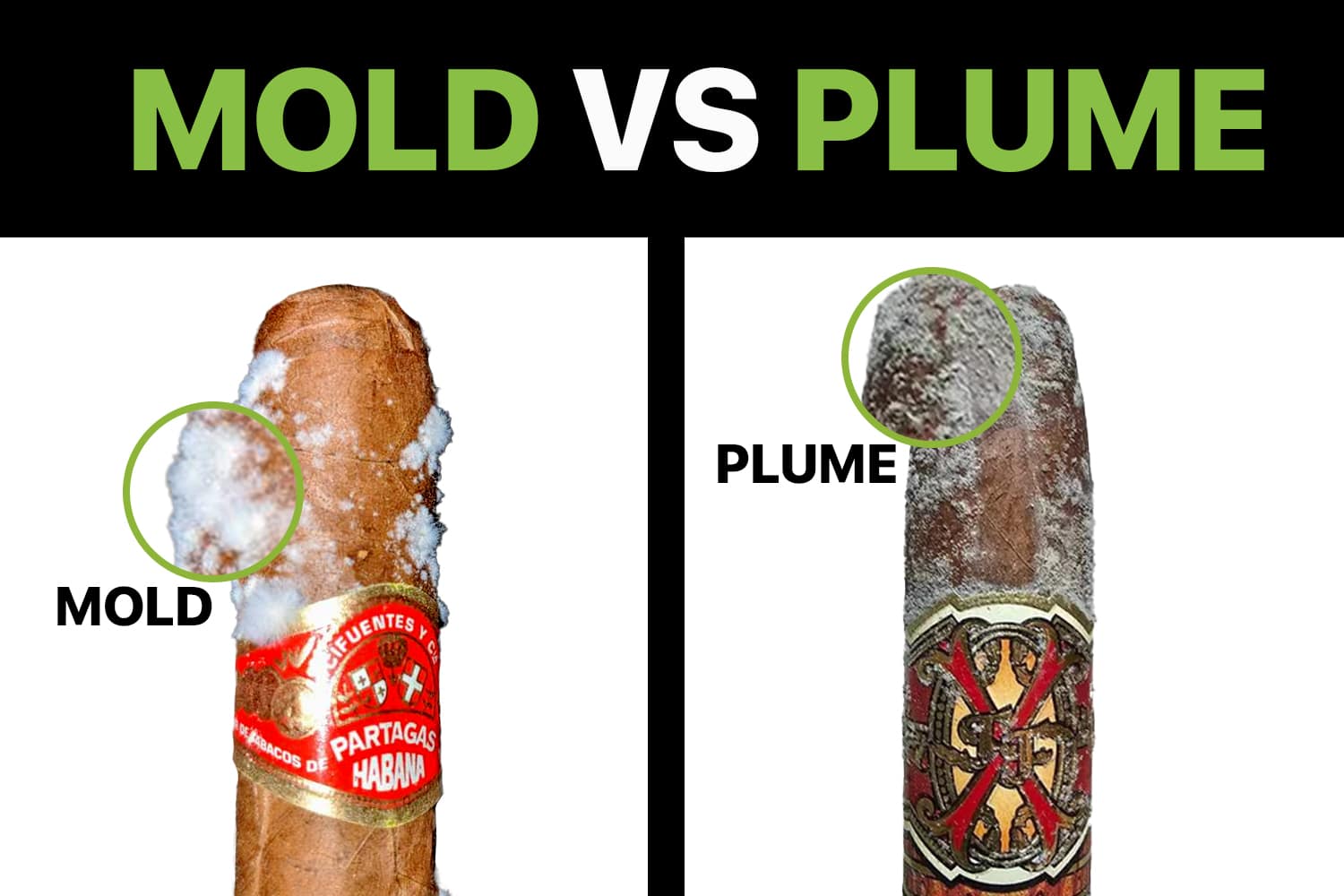
Mold is a blue or green substance that doesn’t brush off cigars. On the other hand, plume is white and more dust-like. Crucially, mold is bad, and plume isn’t a cause for concern.
What Does Mold Look Like?
So, what does cigar mold look like? Mold is a type of fungi that grows on cigars when storage conditions are not ideal. If the relative humidity rises above 75% and temperatures exceed 70˚F, mold can develop. Hence the importance of a good humidor. You may notice a hairy substance crisscrossing the wrapper of your Romeo y Julieta.
In some cases, this means that the oils in the cigar are crystallizing. But if the substance is blue or green, you could be dealing with green mold on cigars. Mold can also appear as a white, spotty substance.
What Does Plume Look Like?
Plume or bloom is a sign that your cigars are aging marvelously and have been stored correctly. The tobacco oils are coming to the surface of the stick and crystallizing there.
Plume differs from cigar mold because it is shiny and, most of the time, can be rubbed off the wrapper quickly. It may look similar to dust, but it’s much finer and is a sign of a well-maintained cigar. When you see a stick with plume on it, it means your humidor conditions are perfect.
Unlike mold, plume is harmless and signals the cigar is aging well. It doesn’t affect the flavor negatively. Some cigar aficionados even believe it enhances the flavor.
The Quickest Test: Check the Foot
If you take one thing from this guide, take this: plume never grows on the foot of a cigar. Mold does.
Plume forms as the tobacco's oils migrate to the wrapper surface, so it appears on the body of the cigar, never on the exposed tobacco at the foot. Mold, being a fungus, grows wherever conditions let it, including the foot and along the seams. So if you see fuzzy growth on the cut end of the cigar, you're looking at mold, not plume, and no amount of it being white or brushing away changes that.
It's the fastest check you can make. Look at the foot first. Growth there settles the question before you even reach for the color and texture tests below.
What Causes Mold on Cigars?
Like any organic matter, moldy cigars are caused by high humidity and warm temperatures. This creates an environment where mold spores can flourish. Here's a more detailed explanation:
- High Humidity: Excess moisture in the air facilitates the growth of mold. A humidity level above 70% is considered too high for cigars.
- Poor Ventilation: Lack of airflow in a humidor can trap moisture and lead to mold growth. Make sure to ventilate your cigars properly to avoid excess moisture buildup.
- Dirty Humidor: A humidor that isn't cleaned regularly can harbor mold spores. This can spread to your cigars. Wipe down the humidor and change the humidification system.
- Inconsistent temperature: Keep cigars at a consistent 65-70°F (18-21°C). High temperatures can cause condensation and mold.
- Malfunctioning system: An over-saturated or faulty humidification system can release too much moisture.
- Distilled water: Using too much distilled water or improper methods creates excess humidity. This promotes mold growth.
- Cigar Overcrowding: Storing too many cigars in a humidor can reduce airflow. This creates humidity pockets, increasing the likelihood of mold growth.
- Sealed Tubes: Cigars stored in their tubes can trap moisture around the wrapper with nowhere to escape, which is a common and overlooked cause of mold. Open the tube, or take the cigar out of it, before storing it in your humidor.
How to Identify Mold on Cigars
If you suspect your cigar might have mold growing on the surface, there are a few ways to inspect the product. Mold can sometimes look similar to natural cigar phenomena like plume. So, it’s important to know the key differences:
- Color: Inspect the color of your cigar. Mold on cigars typically appears as fuzzy, discolored spots. These are usually white, green, or even blue in color. You can find these spots on the wrapper, foot, or head of the cigar. Sometimes it can be found along the seams. It often looks like a powdery or furry coating.
- Texture: Mold can have a raised, fuzzy, or even slimy texture. You’ll be able to feel this when you touch it. It’s usually more noticeable on the surface and may spread further if not addressed.
- Smell: Smell your cigar. Does it have a distinct odor? Moldy cigars will often exhibit a musty smell. This can smell similar to damp, spoiled food or mildew.
- Handling: Mold has a distinct response to handling. It will remain even if you brush it gently and is not easily wiped off.
Can You Smoke a Cigar With Mold?
So, what happens if you smoke a moldy cigar? You should always avoid smoking cigars with mold. Inhaling mold spores can potentially cause respiratory issues, allergic reactions, or infections. Moldy cigars can also introduce harmful substances into your lungs – a risk you want to avoid.
Moldy cigars can also contaminate your collection. There's the issue of taste too. Moldy cigars will have a musty, unpleasant flavor. This drastically changes the intended smoking experience. Smoking moldy cigars can also leave an unpleasant aftertaste. This can linger long after you've finished.
How Do You Get Rid of Mold?
Getting rid of mold can be tricky business. Handle it improperly, and you could end up damaging your cigars. Mold can also spread to your entire collection. Here’s a step-by-step guide:
- You need to maintain a uniform temperature in your humidor and even humidity. The key to stable humidity is consistency, so don’t leave a humidor near a window. Here, the sun can heat it or the breeze can lower the temperature.
- If you find a moldy cigar in your collection, remove it from your humidor immediately. This will prevent the mold from spreading to other cigars.
- If the mold solely appears on the wrapper, you may be able to rub it off with no damage to the rest of the stick. If you spot mold on the foot, you may have to clip some of the cigar off and inspect the interior to see if there’s any inside. Never light a stick with mold that has penetrated further than the first inch.
- Next up, let your cigar dry off properly. Leave it on a clean surface away from high humidity or direct sunlight.
- Finally, clean your humidor to ensure that no mold spores remain. This will help keep your other cigars safe.
- Be sure to inspect your cigars at regular intervals, helping you to catch mold growth early on. You’ll be able to take action right away, preserving the integrity of your collection.
Can You Save a Moldy Cigar?
Sometimes, but the honest answer is that if you're in any doubt, throw it out. A cigar that's cheap to replace is never worth the health risk of getting it wrong.
If the mold is green or blue, don't try to save it. Bin it. If it's a light, white surface growth on the wrapper only, and the cigar is valuable enough to be worth the effort, some smokers do attempt a rescue:
- Dampen a cotton swab with denatured alcohol (plain vodka also works) and gently clean away all the visible growth.
- Seal the cleaned cigar in an airtight container and place it in the freezer for several days to kill any remaining spores.
- Move it to the fridge for a day so it defrosts slowly, then bring it back to room temperature before returning it to your humidor.
Even done carefully, there's no guarantee every spore is gone, and mold will have affected the flavor. Treat salvage as a last resort for a cigar you'd otherwise lose entirely, not a routine fix.
How to Clean a Moldy Humidor
If mold has spread from the cigars to the humidor itself, cleaning the box properly matters as much as dealing with the cigars, or the problem comes straight back.
Remove all the cigars first. Wipe down every interior surface with a cloth dampened in a mix of water and isopropyl alcohol, then leave the humidor open to dry for a day. Check that no spores remain in the corners and seams. For anything lodged in tight crevices, a piece of very fine-grit sandpaper works, followed by another wipe-down. Once the humidor is fully dry and clean, season it again before the cigars go back in, since cleaning strips the cedar of its moisture.
How to Prevent Mold on Cigars?
There are a few factors involved in avoiding mold developing on your cigars. They include humidity, temperature, and regular checks, along with humidity packs if necessary:
- Proper Humidity: The ideal humidity range for cigars is 65% to 70% relative humidity. If the humidity is too high (above 70%), you risk mold growth due to excess moisture. If the temperature is too low, on the other hand (below 65%), your cigars can dry out, losing their flavor.
- Temperature: Temperature control is just as important as humidity. Both are crucial for preserving the integrity of your cigars. Keep your storage temperature at around 68°. Temperatures above this can cause moisture to accumulate, promoting mold growth.
- Monitoring: Monitor your cigars regularly with a reliable hygrometer. Both analog and digital hygrometers are available. Digital varieties are usually more accurate. Check the hygrometer readings regularly, ideally once per week.
- Watch the Seasons: The risk shifts through the year. In winter, home heating dries the air, and overcompensating by adding too much moisture is a common way people cause mold. In summer, heat is the bigger danger, so keep cigars somewhere cool. Adjust your approach rather than setting the humidor once and forgetting it.
- Humidity Packs: Silica gel packs and Boveda humidity packs are both effective options. They help maintain stable humidity levels in your humidor. They reduce the chance of humidity fluctuations. These can eventually lead to mold growth on your cigars.If you use Boveda, it’s also worth knowing how long Boveda packs last so you can replace them before they stop regulating humidity properly.
Keep Mold Off Your Best Cigars?
To keep your Cuban cigars mold-free and well-aged, a well-maintained humidor is essential. Proper care of your humidor ensures the best conditions for aging your cigars. If you store your cigars properly, you’ll help preserve the flavor and quality of your cigars for years to come.
For authentic Cuban cigars, look no further than SwissCubanCigars. We offer the very best brands like H. Upmann, Hoyo De Monterrey, and Cohiba. Explore their full selection online and refine your cigar experience today.
Frequently Asked Questions
Can cigars get moldy?
Yes. Cigars are organic, and in warm, damp conditions mold spores will grow on them just as they would on any tobacco. It usually happens when humidity climbs above 75% and temperatures rise past 70°F, most often because of a poorly regulated or dirty humidor.
What happens if you smoke a moldy cigar?
You risk inhaling mold spores, which can trigger respiratory problems, allergic reactions, or infections. Beyond the health risk, the cigar will taste musty and unpleasant, with an aftertaste that lingers. It's not worth it, avoid smoking any cigar with mold on it.
Is it mold or plume on my cigar?
Three quick checks. Plume brushes off easily and leaves no stain; mold clings. Plume is white; mold is often green, blue, or a fuzzy white with a musty smell. And plume never grows on the foot of the cigar, so any growth on the cut end is mold. Plume is harmless and a sign of good aging; mold means the cigar should go.
Can you save a moldy cigar?
Sometimes, but only if the mold is light, white, and on the wrapper. Green or blue mold means bin it. For a valuable cigar, some smokers clean the growth with an alcohol swab, then freeze and slowly defrost it. There's no guarantee it works, and the flavor is usually affected, so when in doubt, throw it out.
Does plume mean a cigar is good?
It's a good sign. Plume forms when a well-stored cigar's oils migrate to the surface over months or years of proper aging. It doesn't harm the flavor, and many smokers take it as a sign the cigar has matured well. It's most common on oily, aged tobacco, including many Cuban cigars.
Sep 01, 2026
Last Modified: Sep 01, 2026

Table of Contents


