
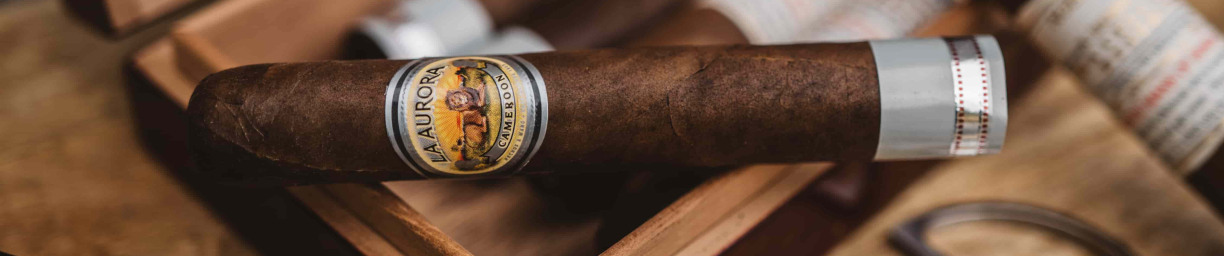
How to Spot Fake Cuban Cigars

There’s nothing quite like smoking a genuine Cuban cigar. But lighting up a fake one? That’s just frustrating. It might look convincing at first, but the scent is slightly off. Once you take a pre-draw, the difference becomes altogether obvious.
If you’re new to Cuban cigars, learning how to spot a fake is essential. Thankfully, Cuba’s cigar industry has put safeguards in place. This helps identify authentic cigars. This guide will discuss how to spot fake Cuban cigars. Read on for the key signs to look for, so you can be confident you’re enjoying the real thing.
The Fastest Check: Verify the Box Code
Most of the checks in this guide rely on your eyes, nose, and judgment. There's one that doesn't, and it's the first thing worth doing if you can see the box.
Every box of genuine Cuban cigars carries a factory code and a date code, stamped on the underside. Since 2010, these have been paired with the warranty seal's barcode and, on current boxes, a unique code you can check against Habanos' own records. If the code doesn't exist in their system, or comes back attached to a different cigar than the one in your hands, you're holding a fake.
Here's how to use it:
- Turn the box over and find the stamped code on the base. You're looking for a factory code and a date code, usually a short letter string paired with letters or numbers marking the month and year.
- Note the barcode and any unique verification number on the warranty seal.
- Enter the details on the official Habanos verification tool at habanos.com. Genuine boxes return a match. Fakes either return nothing or a mismatch.
A word of realism: counterfeiters do clone real box codes, so a valid code alone doesn't prove authenticity. What it does do is catch the lazy fakes fast, and a code that fails is a definite fake. Treat it as the quickest way to rule a box out, then use the sensory and construction checks below to rule one in.
How to Spot a Fake Cuban
Cuban cigars are prime targets for counterfeiters. This is thanks to their prestige, price, and popularity. Counterfeiters will typically make cigars that look similar to well known Cuban cigars. They will also imitate some of the unique features, like stamps, boxes, seals, and stickers.
If you only look at the warranty stamp, for example, you can be deceived. You need to inspect many different features. Only an authentic Cuban cigar will have them all. Check out our tips below and learn how to tell if Cuban cigars are real.
Check the Cuban Government’s Warranty Stamp
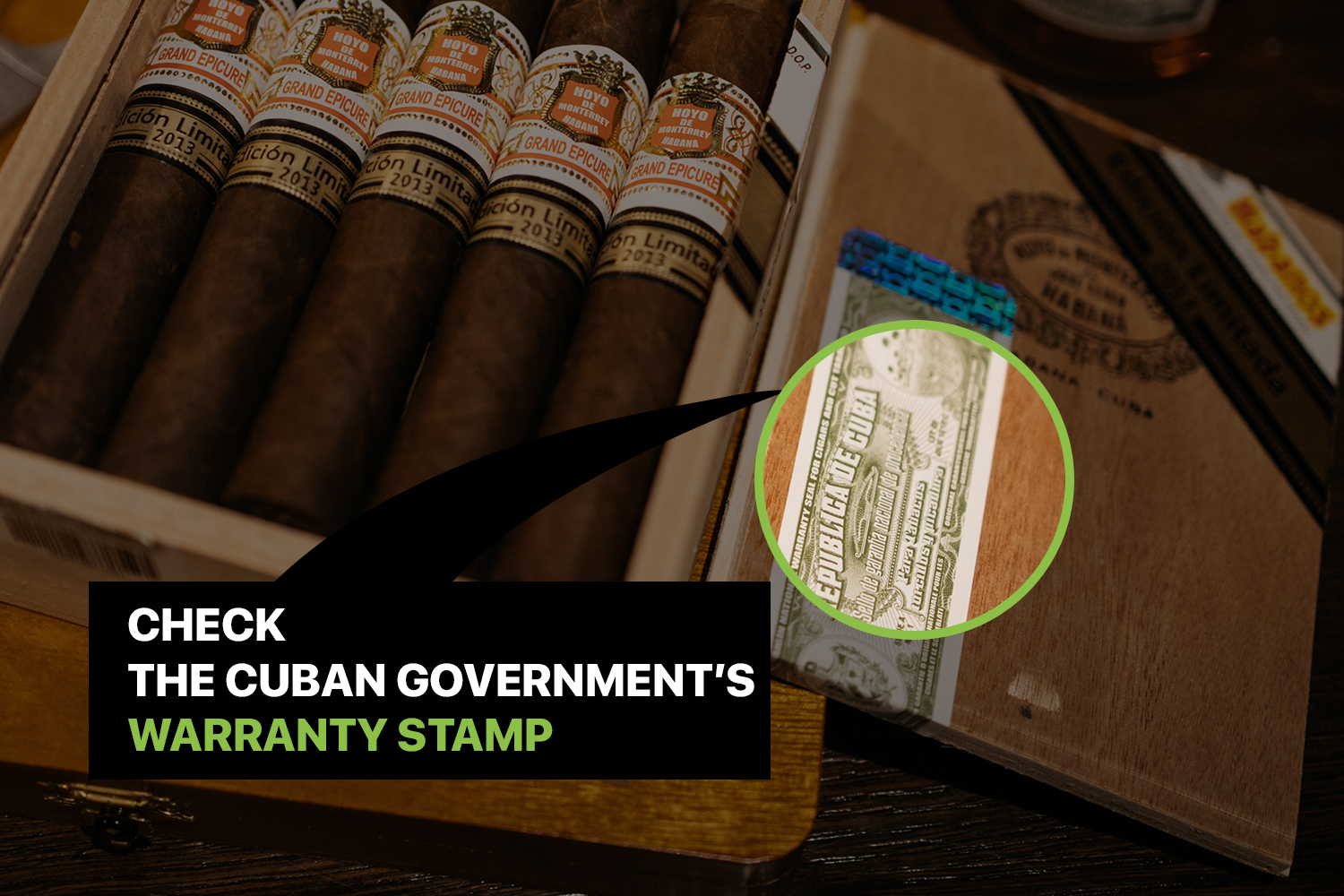
The stamp or “Sello de garantia nacional de procedencia” was introduced in 1889. This was when Cuba was a Spanish colony. The independent Cuban government established a new warranty stamp in 1912. The most recent warranty label is reminiscent of these early stamps. However, it features modern anti-counterfeiting measures adopted in 2009, including:
- Hologram
- Synthetic paper
- Anti-removal and anti-copy protection
- Unique barcode
- Microdot
All warranty seals feature green ink of varying shades on a white background. Each stamp should be either 7.20” x 2.52", 3.82” x 1.34", or 2.36” x 0.83" in size depending on the product type. Whether it’s Punch cigars or other Cuban classics, the stamps are placed on the left side of boxes. You'll find this on the outer packaging’s opening.
Check the Box
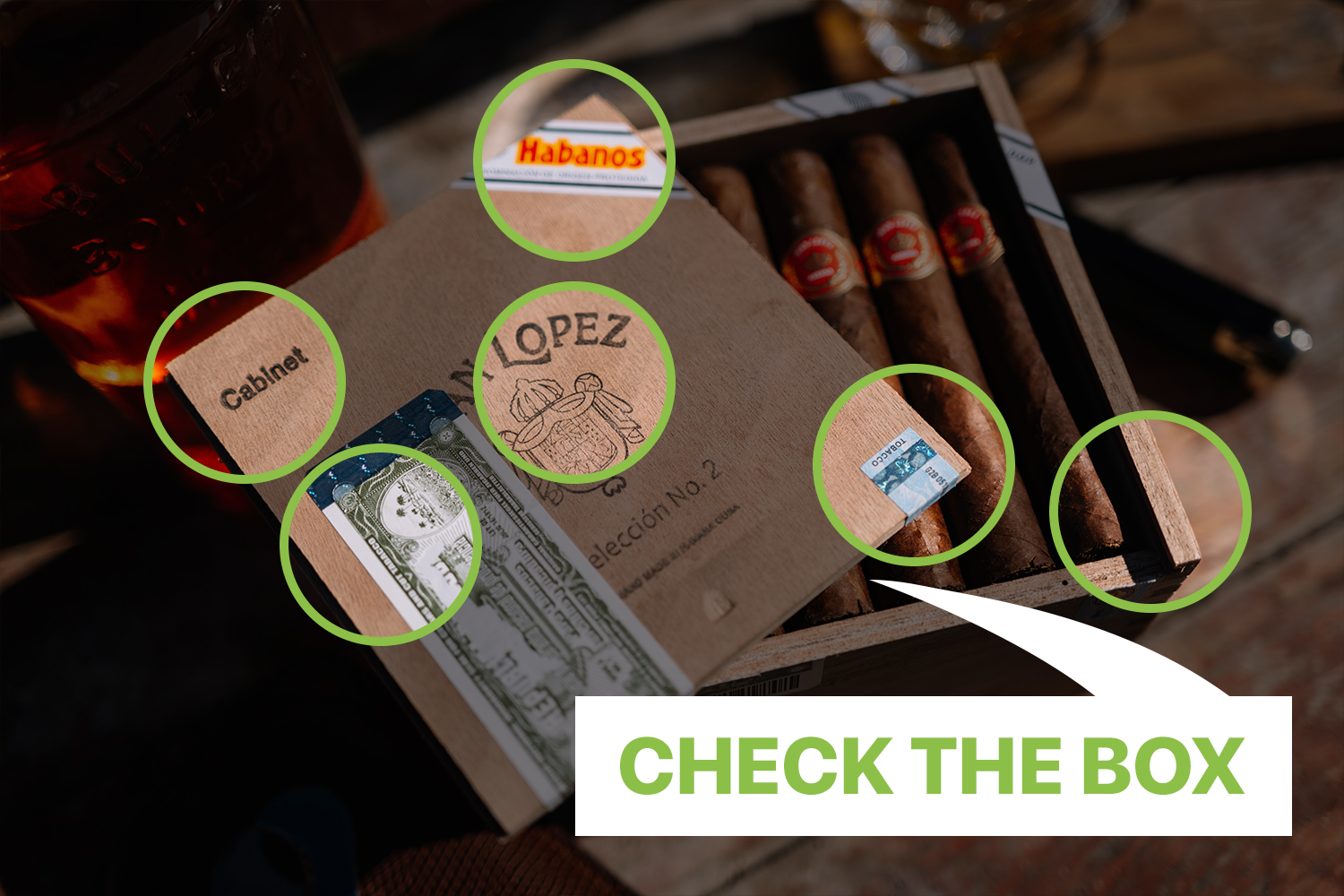
Wondering how to spot fake Cuban cigars? Start with the packaging. Cuban cigar boxes give several clues as to whether or not the cigars are authentic. Paper coverings, seals, and decorations are used to dress authentic Cuban cigar boxes. So, be on the lookout for inconsistencies in color or design quality.
Full boxes contain cedar sheets with special curved openings. These are placed at one corner between rows of cigars. The openings on sheets in counterfeit boxes are often cut straight, if at all. Boxes should also feature cigars of uniform size. If that box of Montecristo cigars seems an odd fit or has a clear plastic or glass lid, they are sure to be fake.
Additionally, each box should include a warranty seal with a barcode and hologram. This can be verified on the official Habanos verification website. Missing or poorly printed seals are huge red flags.
Check the Habanos Sticker
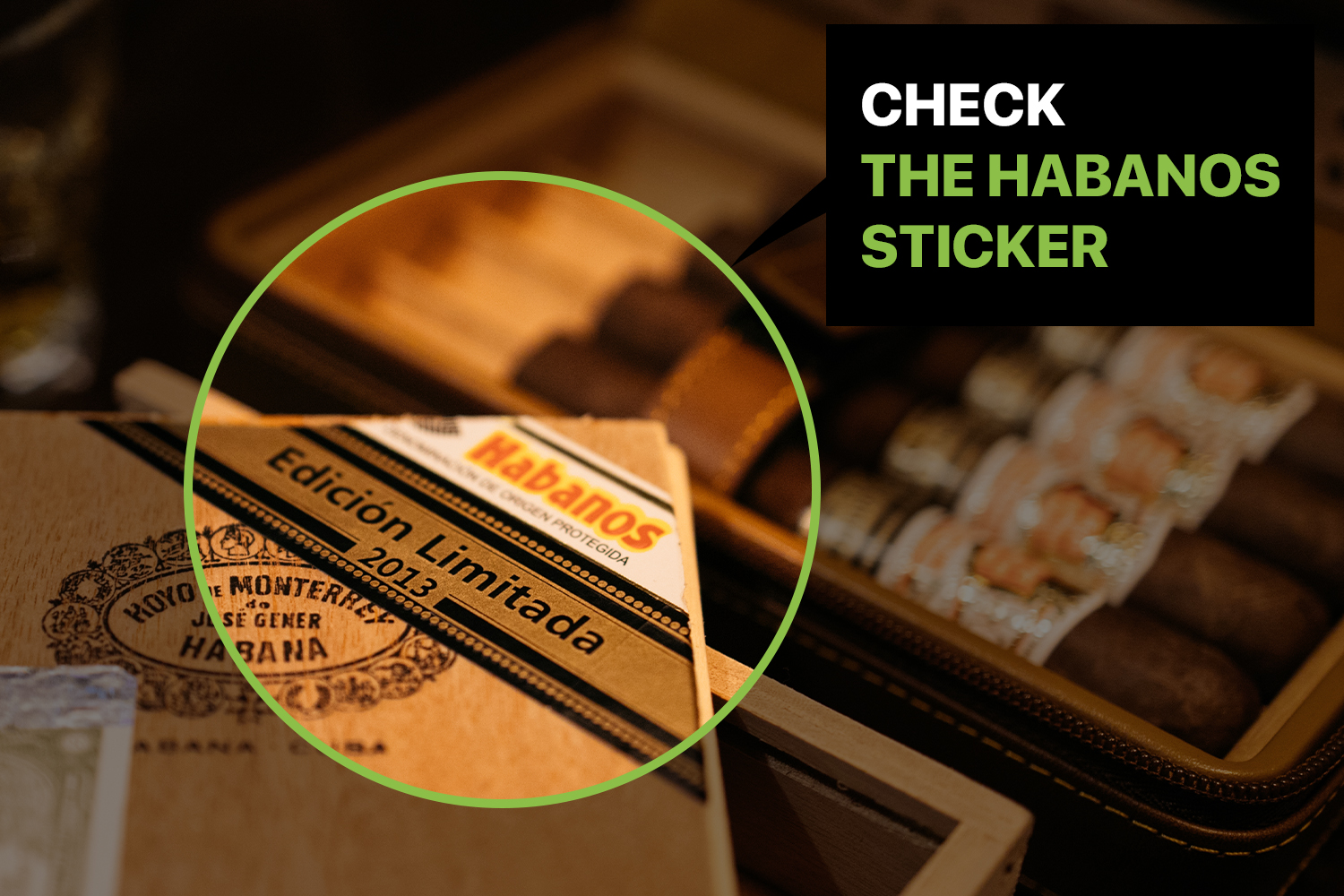
Every box of authentic Cuban cigars has a “Denomination of origin” sticker. The sticker includes a stylized tobacco leaf. It has a red and orange “Habanos,” and the words “Denominación de origen protegida” running along the lower edge.
The sticker is usually placed diagonally across the top corner of the box. This signifies that the cigars are of the highest quality. It means they have passed rigorous regulations. These were set by the governing body of the Protected Denomination of Origin Habanos.
Counterfeits often use lower-quality printing. They will be blurry, faded, or off - color. So be sure to check this carefully.
Finally, on authentic boxes, the sticker placement is consistent and precise. Misaligned stickers are indicative of fake Cuban cigars.
Check the Band

Cigar bands might look like the real deal, but always check the quality of the paper used. You should also check the level of detail in the band’s design. Some Cuban cigars, such as the elite Cohiba Behike 54, feature holographic images on the band. This acts as a defense against counterfeiting. Also, check to see that all the bands in a box line up perfectly. Expert banders or Anilladoras band real Cuban cigars.
The band should be centered on the cigar. It will be securely placed without wrinkles, creases, or loose ends. If this area of construction looks imperfect, you probably have a fake on your hands.
Check the Ash When You Smoke It
The ash tells you something the wrapper can't. A genuine Cuban tends to burn a firm, gray ash, often with a salt-and-pepper look to it. Many fakes, made with non-Cuban tobacco, burn a bright, pale, almost white ash instead.
Treat this as a strong signal rather than proof. Ash color is also affected by the soil the tobacco grew in, how the cigar was stored, and how evenly it's burning, so a Cuban can occasionally throw a lighter ash and a non-Cuban can sometimes burn gray. Read it alongside the other tells, not on its own. But a stark white ash on a cigar sold to you as Cuban is a reason to look harder at everything else.
Smoke the Cigar
The most advanced counterfeit cigars might not seem that bad of a smoke to the casual smoker. Yet, those familiar with Cuban cigars know nothing is like an authentic Cuban cigar. Smoking the cigars is a tried and true method for telling the difference between a real and a fake. A Cuban cigar will have an unmistakable character, taste, and ash. You can find out more in our guide to cigar tasting.
First examine the construction of the cigar. Veins and minor inconsistencies are to be expected on many authentic hand-rolled cigars. But, hold an authentic cigar in hand and you can identify this as part of the craftsmanship. All the cigars in the box should be of uniform size, and each should have a triple cap. You can cut open a cigar to further examine the quality of the tobacco and craftsmanship.
Smell the Cigar
One of the quickest – and most reliable – ways to detect a fake is by using your sense of smell. Authentic Cuban cigars have a distinct aroma. This could be rich, earthy, or woody. You might notice notes of cedar, sweet tobacco, spice, cocoa, or even floral hints. It all depends on the blend and the cigar’s age.
Fake cigars, on the other hand, will have a distinctively ‘off’ smell. This could be:
- A musty, stale scent
- Sharp, sour, or ammonia-like notes
- A flat or chemical smell that lacks depth
If you have access to a full box, smell a few cigars individually. Authentic Cubans will smell exactly the same. Their controlled production process ensures uniformity. This is true for the blend of the cigar and the quality.
Alternatively, fake cigars often vary wildly in smell. This is because they’re usually made with inferior or mixed filler tobaccos. They also don’t follow strict quality standards. Quite often, fake Cuban cigars are simply stuffed with banana leaves.
Check the Construction
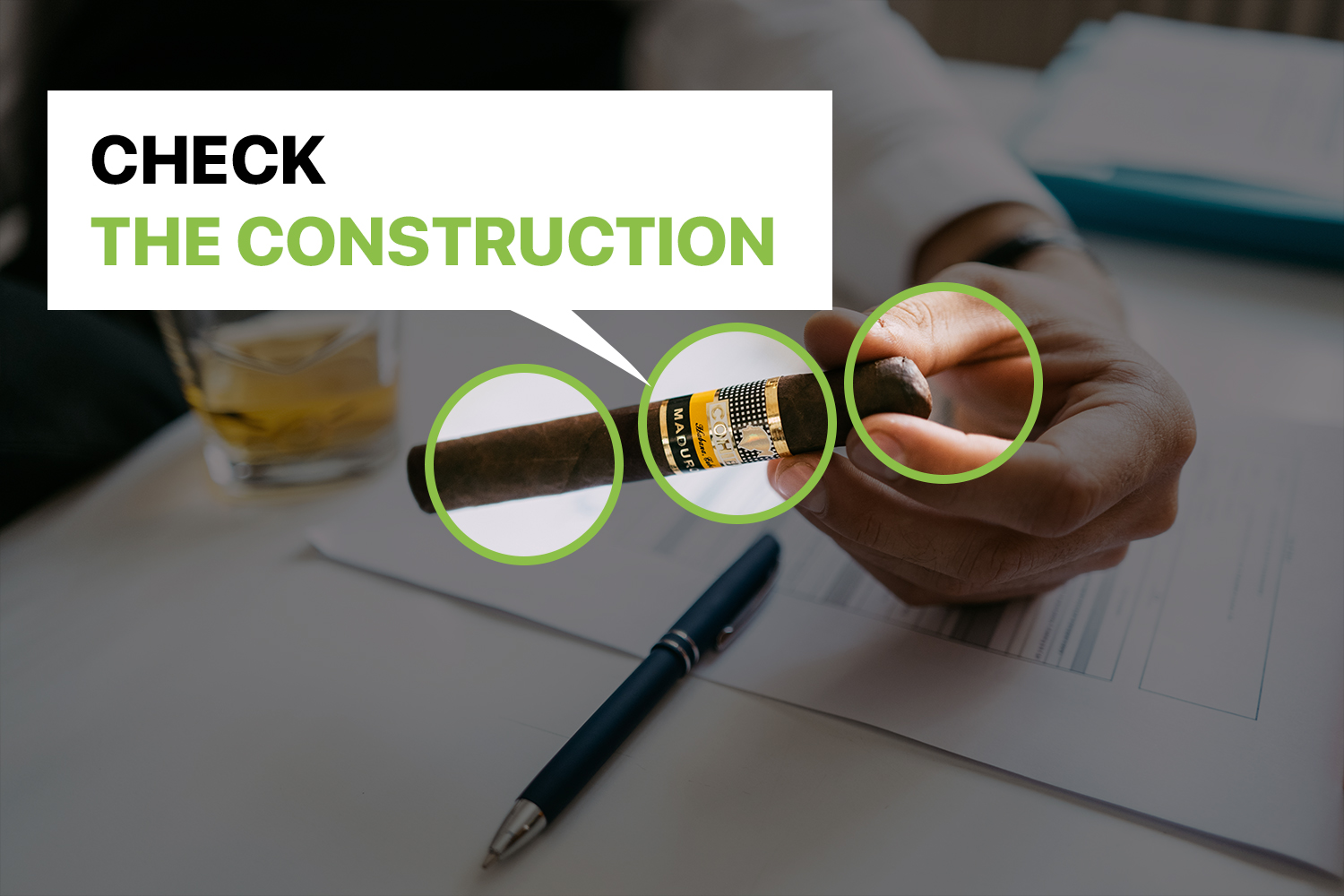
Start by examining the wrapper. This should be smooth, well-crafted, and free from major flaws. A genuine cigar won’t have a shriveled or unattractive appearance. Counterfeit cigars often try to imitate premium Cuban brands. This is especially true for high-end ones like Cohiba. These, however, typically lack the same quality control.
If you're inspecting a Cohiba, pay attention to the head of the cigar. This should feature the signature triple cap. If this detail is missing, you're likely dealing with either poor storage or fake Cuban cigars.
Next, take a look at the foot of the cigar (the open end). If you notice gaps, holes, or uneven filler, that’s another red flag. These signs indicate poor craftsmanship or counterfeit production.
Look at the Price
Cuban cigars are luxury products, and their price reflects that. Whether you're buying a single stick or a full box, authentic Cubans are never cheap. This is especially true for premium lines like Cohiba Behike, Montecristo No. 2, or Partagás Serie D No. 4. If someone is offering these cigars at a huge discount, it should raise a red flag.
If a price feels oddly low compared to what you’ve seen from verified sellers, chances are it's not the real thing.
Weight of the Product
Wondering how to tell if Cuban cigars are real? One of the most reliable ways is examining its weight. Genuine Cuban cigars are crafted with premium, aged tobacco and are hand-rolled. As a result, they will demonstrate a weighty feel. This comes from the dense and high-quality tobacco used in the filler.
Fake cigars often feel lighter than their authentic counterparts. This is because they are filled with low-quality short fillers or non-tobacco materials. This includes dried leaves, paper, or stems.
Make sure to pay attention to any soft spots or areas that seem under-filled. This is a clear indicator of poor construction and inferior tobacco. Additionally, the cigar should feel uniform in density from the foot to the head.
Red Flags That Guarantee a Fake
Most of the checks above are about weighing up evidence. A few things, though, are instant fails. If you see any of these, you don't need to look further.
A Glass or Clear Lid
Cuba does not box its cigars in glass-topped, Lucite, or clear-lidded boxes. If you can see the cigars through the lid, they're fake. This one is close to universal, and it catches a huge share of tourist-market counterfeits.
A Barber Pole "Cuban"
Barber pole cigars, wrapped in two alternating colors of leaf, look striking, but Cuba doesn't make them. Any cigar sold as a Cuban with a barber pole wrapper is not genuine, and fake Cohibas in this style turn up regularly.
An Edición Limitada That Doesn't Add Up
Cuba releases a small, documented set of Edición Limitada cigars each year. If someone offers you a limited edition for a brand and year that never had one, it's a guaranteed fake. The releases are a matter of public record, so the claim is easy to check before you buy.
The Wrong Box Count
Some cigars only ever come in specific pack sizes. If a cigar that should arrive in a box of ten shows up boxed in twenty-five, the packaging is telling you it's fake before you've even looked at the cigar.
Street, Beach, or Apartment Sellers
The single most common source of fake Cubans is the informal vendor: the man on the street in Havana, the seller on a Caribbean beach, the "come up to my apartment" offer, the relative who supposedly smuggles them out of the factory. That last line is the oldest one in the trade. Genuine Cubans don't come from any of these. They come from licensed retailers.
How to Tell if a Cohiba Is Real
Cohiba is the most counterfeited cigar brand in the world. It's the name non-smokers know, it carries the highest prices, and that combination makes it the first target for anyone faking Cubans. If you're checking a Cohiba specifically, a few details matter more than they do on other marcas.
The Band Security Features
Genuine modern Cohiba bands carry anti-counterfeiting details that are hard to reproduce cheaply. The band's design is sharp and precisely printed, the colors are exact, and higher lines like the Cohiba Behike carry a holographic security strip. Under inspection, a real band is crisp; fakes tend to look slightly soft, off in color, or flat where there should be texture. Hold it against an image of a known genuine band and the differences show.
The Head and The Cap
A real Cohiba is finished to a high standard, with a clean, well-formed triple cap at the head. Cohiba is a premium marca, and the construction reflects it. A rounded, sloppy, or single cap on a cigar sold as a Cohiba points to a fake or, at best, a badly handled one.
The Price, Especially
The economics matter more with Cohiba than any other brand. A genuine Cohiba is never a bargain. The Behike line in particular is among the most expensive cigars in the world, and it's rare. If someone offers you Cohibas, and above all Behikes, at a price that seems too good to pass up, that price is the tell. There is no discount channel for real Cohiba.
Packaging Count
Some Cohiba lines come only in specific box sizes. A box count that doesn't match what the line is actually sold in is a fast giveaway, so it's worth knowing the correct packaging for the specific Cohiba you're buying before you commit.
Where It Came From
More than any other marca, Cohiba is the one the street vendors push, precisely because it's the name that sells. A Cohiba from an informal seller is a fake until proven otherwise. Genuine Cohiba comes through licensed retailers, and nowhere else.
Buy Authentic Cuban Cigars
There’s no better way to relax than with an authentic Cuban cigar. But making sure you're holding the real thing takes a bit of know-how. This extends from recognizing differences in aroma and construction to examining the wrapper. The cap, filler, and every little detail matter.
Genuine Cuban cigars offer a richness and complexity that fakes can’t replicate. Your senses are often the first and best tools for telling the difference. Now that you know how to spot fake Cuban cigars, it’s time to try the real deal. Shop smart and enjoy the confidence that comes with smoking a real Cuban cigar. Experience it just as it was meant to be enjoyed.
Frequently Asked Questions
What's The Most Faked Cuban Cigar?
Cohiba, by a wide margin. Its fame and high price make it the first choice for counterfeiters, with the Behike line faked most of all. Any Cohiba offered cheaply or through an informal seller deserves close scrutiny.
Is It Dangerous to Smoke a Fake Cuban Cigar?
It can be. Genuine Cubans are pure, aged tobacco made under strict quality control. Fakes are often stuffed with inferior filler, and sometimes with non-tobacco material like banana leaves, dried scraps, or floor sweepings. You don't know what you're lighting, which is reason enough to avoid them beyond the wasted money.
Can I Tell a Fake From a Photo Before Buying Online?
A photo lets you check the band alignment, the wrapper, the cap, the box, seal, and sticker, and whether the box has a glass lid. It won't let you check weight, smell, smoke, or ash. The safest approach is to buy from an established Cuban specialist rather than judging authenticity from a listing photo alone.
Are All Cheap Cuban Cigars Fake?
Effectively, yes, if the price is well below the market. Genuine Cubans carry a genuine cost, and there's no legitimate deep-discount supply. A price that seems too good to be true is one of the most reliable signs of a fake there is.
How Do I Check a Cuban Cigar's Box Code?
Find the factory and date code stamped on the underside of the box, along with the warranty seal's barcode, and check them against the official Habanos records at habanos.com. A code that returns nothing or a mismatch means a fake. Bear in mind that codes can be cloned, so a valid code rules a box out of the "obvious fake" pile but doesn't prove authenticity on its own.
Aug 11, 2026
Last Modified: Aug 11, 2026
Table of Contents

